George Kelley reviewed this the other day, and I was tempted, not having read a book by Gérard de Villiers before, though I remember seeing some of them in print here in the '70s.
You might think things are bad in Kabul, and you'd be right. They might even be worse than you imagine. Gérard de Villiers had a reputation for knowing just about all there was to know about spies and spying. You can read all about it in this quite interesting article. It makes me suspect that pretty much everything in Chaos in Kabul is close to the truth.
De Villiers wrote 200 or so books about Malko Linge, Knight of the Order of the Black Eagle, Margrave of Lower Lusitia, Knight of the Royal Order of Seraphim, etc. In addition to all his titles, Malko is an contract operative for the CIA, and in this adventure he's asked to go to Kabul and arrange for the assassination of Hamid Karzai, who's become something of a drag on U.S. policy. An advantageous deal has been cut with the Taliban, who would like to see the assassination happen.
Complications ensue. Lots of them. Since you already know that Karzai is still alive, you know that the assassination fails. Everybody is betraying everybody else, and before long just about everybody wants to eliminate Malko, who is kidnapped (a couple of times), shot at, dumped in a well, and chased all over Kabul (and out of it). De Villiers' local color is as authentic as his information, as he visited all the sites of his novels for research. Besides the action, local color, and betrayals, there's lots of graphic sex, a feature of the novels, that goes way beyond anything dreamed up by Ian Fleming.
Reading this won't make you feel one bit better about our policies in Kabul, but it's entertaining to take a peek behind the scenes and wonder how much is true and how many of the characters are based on actual people.
Chicago Tribune: Three iconic toys have been inducted into the National Toy Hall of Fame after thousands of votes from around the country: bubbles, little green Army men and the frustrating yet addictive Rubik's Cube.

Hardley Savage, Jetman Meets the Mad Madam, Bee-Line, 1966
NYTimes.com: Richard Schaal, an actor, writer and first-generation member of Second City, the Chicago improvisational theater company that sparked a new comedy movement in America, died on Tuesday in Woodland Hills, Calif. He was 86.
Hat tip to Jeff Meyerson.
 There are two thriller writers whose work never fails to give me pleasure no matter how many times I reread their books. One is Alistair MacLean; the other is Jack Higgins. Not long ago I was in the library looking over their shelf of sale books, and I saw a three-in-one volume of Higgins' work. The books included in it are The Last Place God Made, The Savage Day, and Toll for the Brave. I have all three of them in their first U.S. paperback editions, but how could I pass this up for a buck? The answer: I couldn't.
The Last Place God Made is set in Brazil in the late 1930s. Neil Mallory is a bush pilot who's finally put together enough money to get back to England. Unfortunately for him, it's stolen by a prostitute and Mallory has to accept a job from Sam Hannah, another pilot, who has a contract to deliver mail and perform other services for the government. Hannah was an Ace in WWI, and he's the best pilot Mallory's ever seen. It's quite lucky for him that Mallory came along because he desperately needs another pilot to help him. Without help, he'd lose his contract.
What ensues is high adventure in the vein of a western novel, with the indigenous people this time being Brazilian. They've attacked a church, killing a number of nuns, two of whom are unaccounted for. Another nun, along with the beautiful sister of one of the missing women, shows up, and Mallory and Hannah are drafted to go to the church and try to find the women.
There's a lot of flying, plenty of fighting of all kinds (though I don't recall either Mallory or Hannah using a bow as depicted on the cover of the first Fawcett paperback). More than once in his novels, Higgins uses a younger man and an older, slightly corrupt, one paired together in a dangerous enterprise. It seldom works out well.
If you like good writing and just plain entertaining fiction, you can't go wrong with Higgins, and that certainly holds true for The Last Place God Made.
 It would be impossible to imagine the popular music of the second half of the 20th century without the songs of Cynthia Weil and Barry Mann. If you're the right age, you like so many of them that they're on the permanent playlist in your head. Here are a few: "You've Lost that Lovin' Feelin'," "Kicks," "On Broadway," "We Gotta Get Out of this Place," "Uptown," and on and on and on.
Now Weil has turned her hand to writing a YA novel, and while I'm far from being a YA, I found that I was the target audience for it. Why? Because it's set in the summer of 1963, and it's about a young woman who goes to work in the Brill Building with the idea of becoming a songwriter. If I'd had any sense at all, I'd have done the same thing.
JJ Green's parents don't want her to be a songwriter. She's supposed become an attorney, like them, but when she secretly applies for and gets a job in the Brill Building as an assistant to a publisher, with the chance to write some songs, they agree to let her. If she hasn't gotten a song recorded within three months, however, it's off to law school.
It happens that JJ's uncle, Bernie, has an office in the Brill Building. He's a shady operator, and he's been pretty much kicked out of the family. He knows the ins and outs of things, however, and he's able to give JJ some advice. Also in the building is a mysterious green-eyed young man to whom JJ finds herself attracted. And the cleaning lady, who happens to have been a very successful singer at one time. And as if things weren't complicated enough, there's a murder.
Like many of the YA novels that I like, this one has a lot of disparate elements that all come together in a satisfactory resolution. It also has the Brill Building and quite a bit about the music business in 1963. In other words, it's just about irresistible. It has a great beat, and you can dance to it. I hope Weil will write more about that time and place because I'm hooked.
Rare, ‘lost’ John Steinbeck story to be published this week: Steinbeck read the story on the air at the conclusion of one of Orson Welles’ World War II radio broadcasts in July of 1944. However, the story was never published in any of Steinbeck’s collected works or by any literary magazine or journal. Some scholars told the AP they’d never even heard of it.
 Timothy Fuller, This is Murder, Mr. Jones, Pyramid, 1948
Shelf Awareness: The World of Publishing: 1991 vs. 2014
Here in Texas one of the down-ballot races was for agriculture commissioner. The Democratic candidate was a man named Jim Hogan. If you're not from Texas, you never heard of him. That's okay. Most Texans have never heard of him, either. There's a good reason for that. Hogan didn't raise any money, he didn't campaign, and he didn't run any ads in print, on radio and television, or on the Internet. He didn't do anything at all.
And of course he lost. Here's what's interesting, though. He lost by just about the same margin that every other Democratic candidate for statewide office in Texas did. Most of those others spent a lot of money. Millions. They had ads. They went out and shook hands. Hogan did none of that. He just stayed home.
Would he have done better had he campaigned? Maybe, but not enough to have affected the outcome of the race. Most of the Democrats lost by around 20%, just as he did. There's no way to make up a deficit like that.
There's bound to be a moral to that story. I'm still trying to work out what it is.
 The Julius Katz Collection: Dave Zeltserman, Ed Gorman: 9781502706737: Amazon.com: Books The award-winning Julius Katz mysteries have delighted thousands of fans since first appearing on the pages of Ellery Queen Mystery Magazine in 2009. JULIUS KATZ introduced readers to Boston's most brilliant, eccentric, and possibly laziest detective, as well as his sidekick, Archie, a tiny marvel of whizbang computer technology with the heart and soul of a hard-boiled PI.
If you haven't had a chance to meet Julius and Archie yet, now's your chance to get caught up in these charming, delightful and very unusual mystery stories as this collection contains the first six Julius Katz mystery stories originally published in Ellery Queen Mystery Magazine, as well as a never-before published novella, JULIUS KATZ AND THE CASE OF A SLICED HAM.
When Science Fiction Grew Up
Includes an impressive reading list.
Link via SF Signal.
Always young and beautiful to me.
 Geogiana Hunter, The Girl on the Couch, Pyramid, 1956
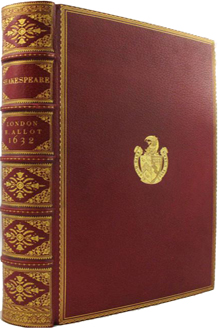
 Rare and Collectible Books by William Shakespeare: Considered the greatest writer in the English language, William Shakespeare's works are among the world's most widely read, most intensely studied, and most passionately collected. Early editions are also some of the most valuable.
The Smoking Gun: Incensed that fellow shoppers took a spot she was waiting for in a Walmart parking lot, a Nebraska motorist subsequently sped toward the duo in her PT Cruiser, striking one of the victims, cops allege.
BBC News: Clarinettist Acker Bilk, who personified the trad jazz revival of the 1950s and '60s, has died after a lengthy illness at the age of 85.
His most famous song Stranger on the Shore was the UK's biggest selling single of 1962 and made him an international star.
 The Autumn Dead was the first book I ever read by Ed Gorman, and I was immediately hooked on the prose, the characters, and the plotting. Gorman's books have never let me down in the years since then, and I highly recommend this double volume. As is so often the case with Stark House books, the additional material included with the novels is worth the price of admission on its own. A tremendous bargain.
STARK HOUSE PRESS: The Autumn Dead / The Night Remembers
978-1-933586-60-1
Two of Gorman’s best detective novels, the first one featuring Jack Dwyer, former-cop-turned-P.I., who tries to solve a mystery for a past love, and the second featuring Jack Walsh in a mystery which author Jeremiah Healy called “an extraordinary novel” and Kevin Burton Smith in Thrilling Detective sited as “his masterpiece.” New introductions by Rick Ollerman and Ben Boulden are included in this December 2014 release.
 STARK HOUSE PRESS: Jack O'Judgment / Captains of Souls
978-1-933586-74-8
A pair of classic thrillers from the creator of King Kong, the Four Just Men, Mr. J. G. Reeder and other famous characters. Who is the mysterious charlatan who calls himself Jack o’Judgment and eludes both criminals and cops alike? And in Captains of Souls, a woman’s honor is at the heart of a crime, but who will take up the cause of a man accused of murder? These two intriguing mysteries also include a new introduction by Ed Hulse. Scheduled for October 2014.
STARK HOUSE PRESS: Jack O'Judgment / Captains of Souls
978-1-933586-74-8
A pair of classic thrillers from the creator of King Kong, the Four Just Men, Mr. J. G. Reeder and other famous characters. Who is the mysterious charlatan who calls himself Jack o’Judgment and eludes both criminals and cops alike? And in Captains of Souls, a woman’s honor is at the heart of a crime, but who will take up the cause of a man accused of murder? These two intriguing mysteries also include a new introduction by Ed Hulse. Scheduled for October 2014.
HuffPost Live: Montreal Teacher Fired Over 40-Year-Old Nude Scenes
Hat tip to Mel Odom.
 Carter Brown (Alan Yates), The Sometime Wife, Signet, 1965
 I'm just going to say it up front: I love this movie. I know that nobody else does. Most people don't even seem to like it. I can't figure out why. It's based on the comic strip, and it does everything right (from my point of view). It's set in the right period (the '30s), and it's based on some of the actual comic strip stories. It doesn't go over the top with special effects. It captures the spirit of the old movie serials (and maybe I'll talk about the serial version of The Phantom one of these days).
It has a great cast, and if you don't think Billy Zane can pull off an authentic hero, you should watch this. You might change your mind. Others include Treat Williams chewing the scenery, Patrick McGoohan, Catherine Zeta-Jones (as a female air-pirate!), and Kristy Swanson, for starters. It has the Skull Cave, Hero (the Phantom's horse), Devil (the Phantom's dog), and the Phantom's cool ring. It's set both in New York and in the jungle, and both settings look great.
And, yes, there's a plot. It's an origin story, and there's the usual MacGuffin (or three of them, mystic skulls that will supposedly allow one to rule the world if all three are brought together). It has action, it has heart, and it's fun from beginning to end. Or it was for me, if not for anybody else. Should've been a big hit, should've had many sequels. Didn't happen, more's the pity. But that's okay. I love it, anyway.
Jeopardy Answer: He wrote I, the Jury, in three weeks and introduced us to Mike Hammer.
Contestants: *crickets*
NPR: Tom Magliozzi, one of public radio's most popular personalities, died on Monday of complications from Alzheimer's disease. He was 77 years old.
 After their exertions and close calls in the second book in this entertaining series, Arthur Cathcart and Natsumi Fitzgerald are taking easy down in the Caribbean, secure in new identities and happily believing that all their troubles are behind them.
Fat chance. In a gripping first chapter they're kidnapped by some ruthless characters who begin to question them about things they have no knowledge of. Reprieved from death, they realize that the only way they can be safe is to figure out what their kidnappers were after and to clear themselves of the various charges against them in the U.S.
So instead of trying to set up new identities and hide out somewhere else, they go on the offensive. It's not easy because their shadowy enemies are able to track them down by the use of technology, but Cathcart is as good as anybody at that game, and better than most. He's excellent at old-fashioned disguises too. Knopf generates plenty of suspense and the plot perks right along. It's best to have read the earlier books in the series, beginning with Dead Anyway, if you want to appreciate this one. The whole series is recommended.
 Carter Brown (Alan Yates), Suddenly by Violence, Signet, 1959
 Helen McCloy, Dance of Death, Dell, 1944