Because I'm doing that Gold Medal Corner article about Charles Williams for Steve Lewis' next Mystery*File, I've been re-reading some more of the books. The more I read, the more convinced I am that Williams was one of Gold Medal's best.
Nothing in her Way is about con games, and there are a couple of elaborate ones in the book, along with some minor ones. The way Williams handles these, and the way his plot keeps coming up with one suprise after another, shows you his technical mastery. And even though you might know how the story is going to end, you don't. Not really. Because another thing I've noticed about Williams is that he writes terrific endings. I'm not talking about the climactic events. I'm talking about the final sentences.
A Touch of Death is a noir thriller, one of those where a guy gets mixed up with a dame in a scheme to make some money. It seems simple at first, the way it always does, but then things start to get complicated. The narrator, Lee Scarborough, thinks he's ahead of the game all the way until the end, when he finds out that he didn't even know the rules. A devastating ending, almost as good as the one for River Girl.
If you're not acquainted with Charles Williams' books, you're really missing some great reading.

Wednesday, September 29, 2004


Monday, September 27, 2004
: RevolutionSF - Boppin' at the High School Hop : Fiction
: RevolutionSF - Boppin' at the High School Hop : Fiction
In honor of the opening of Shaun of the Dead, I'm posting this link to my very own zombie story, which appeared in the excellent webzine revolutionsf (and I'd give 'em a plug even if they hadn't published my story).
In honor of the opening of Shaun of the Dead, I'm posting this link to my very own zombie story, which appeared in the excellent webzine revolutionsf (and I'd give 'em a plug even if they hadn't published my story).
Robert B. Parker's DOUBLE PLAY
I've admitted it before, and I'll admit it again: I'm Robert B. Parker's target audience. Whatever it is that he does, I like it. So naturally I read his nonseries novel Double Play. I have a feeling that this book fits into my previous comments about the generation gap in the mystery-reading public. It seems to me that this is definitely an Old Guy's book.
Why?
Number one, it's about baseball. How many young baseball fans do you know? Don't young people all like some cooler, faster-moving sport?
Number two, it was written by Robert B. Parker, who's even older than I am. (Maybe that's why I like his work.)
Number three, it's set in the 1940's. I don't remember much about the time Jackie Robinson came up to the major leagues, but soon after that I became an avid baseball fan and baseball card collector (check out some of my cards here if you'd like to see them). Parker really nails the time period, especially in the autobiographical chapters interspersed throughout the narrative. In fact, the short chapter on Life magazine is worth the price of admission all by itself. The autobiographical chapters are, for me, the most interesting part of the book, since they make the setting personal for Parker and in a way for me.
Number four, it has plenty of that male bonding stuff that's in all the other Parker books you ever read. And all that stuff about a code, too. This time, the main character is a guy named Burke. I didn't catch the first name; maybe it's Edmund. I mean, that would fit, right? Edmund Burke, Edmund Spenser. That Parker is a real cutie, slipping in those English major jokes the way he does.
So what? you're saying. What about the plot? Well, that's about Burke, who gets a job as Jackie Robinson's bodyguard for Robinson's first year in the major leagues. Burke is what we Old Guys used to call a burned-out case, thanks to WWII (The Big One) and his ex-wife. He's going to find a kind of redemption, though, thanks to Robinson and a woman named Lauren. You know that from the start, probably, so I'm not spoiling anything. How it happens is what you'll have to read the book to find out.
Why?
Number one, it's about baseball. How many young baseball fans do you know? Don't young people all like some cooler, faster-moving sport?
Number two, it was written by Robert B. Parker, who's even older than I am. (Maybe that's why I like his work.)
Number three, it's set in the 1940's. I don't remember much about the time Jackie Robinson came up to the major leagues, but soon after that I became an avid baseball fan and baseball card collector (check out some of my cards here if you'd like to see them). Parker really nails the time period, especially in the autobiographical chapters interspersed throughout the narrative. In fact, the short chapter on Life magazine is worth the price of admission all by itself. The autobiographical chapters are, for me, the most interesting part of the book, since they make the setting personal for Parker and in a way for me.
Number four, it has plenty of that male bonding stuff that's in all the other Parker books you ever read. And all that stuff about a code, too. This time, the main character is a guy named Burke. I didn't catch the first name; maybe it's Edmund. I mean, that would fit, right? Edmund Burke, Edmund Spenser. That Parker is a real cutie, slipping in those English major jokes the way he does.
So what? you're saying. What about the plot? Well, that's about Burke, who gets a job as Jackie Robinson's bodyguard for Robinson's first year in the major leagues. Burke is what we Old Guys used to call a burned-out case, thanks to WWII (The Big One) and his ex-wife. He's going to find a kind of redemption, though, thanks to Robinson and a woman named Lauren. You know that from the start, probably, so I'm not spoiling anything. How it happens is what you'll have to read the book to find out.
Sunday, September 26, 2004
Hard Case Crime
The Houston Chronicle has a nice spread on Hard Case Crime today. Front page of the Zest magazine, and two pages inside. As a sidebar on another page, there's a little article on me. Here it is.
The man with a taste for the hard-boiled
By LOUIS B. PARKSCopyright 2004 Houston Chronicle
ALVIN -- Mystery writer and vintage paperback collector Bill Crider has a recurring dream.
"I'm driving in some small town, and there's this little out-of-the-way bookstore. I go in, and there it is, full of these old books."
 Carlos Javier Sanchez : Chronicle Alvin resident Bill Crider has written more than fifty books about different detectives. |
But anyone who reads noir crime thrillers knows that dreams usually become nightmares in the final chapter.
"The bad part is," Crider says, "I can't read the titles."
Crider's suburban home is like the dream bookstore -- floor-to-ceiling with thousands of vintage paperback books.
"My wife Judy is a saint, believe me," he says.
Crider, 63, has a definite taste for the era of bad blondes, big guns and tough guys.
"I got interested in the writers who wrote (crime) paperback originals, like Jim Thompson, Harry Whittington, Gil Brewer, Charles Williams, Donald Hamilton -- particularly the (Fawcett) Gold Medal books, the Ace Double books. I have all of those."
Since the mid-1980s, the retired English professor has published more than 50 novels (see www.billcrider.com). Many are mysteries -- though not the hard-boiled style he collects -- under his own name, including a dozen about modern Texas sheriff Dan Rhodes. This summer brought Dead Soldiers featuring Carl Burns, an English professor at a small Texas college.
Crider also writes under pen and house names and does Willard Scott's weatherman mysteries, as the TV star freely admits. Crider's wife is his copy reader and occasional collaborator.
But book collecting is his passion. His essay on his first love, paperback originals, is at www.allanguthrie.co.uk/bcpbo.htm.
"There are a lot of reasons I like them," Crider says. "They're short. Most writers in this vein are really good storytellers. They get in, tell the story; it moves fast. They do a good job with the characters in a short space."
Crider used to haunt used bookstores looking for rare paperbacks. Now he buys most over the Internet, especially at eBay.com and abebooks.com.
"It's gotten so easy," he says. "And the books have gotten much more expensive. The Jim Thompson books I got for a dime are worth a couple of hundred bucks now."
Not that he'd ever sell them.
Saturday, September 25, 2004
The STAR WARS Trilogy
OK, so I bought the set of "original" trilogy on DVD this week. I may never watch the movies, but I figured no house should be without the set.
I hear that there's a lot of whining about George Lucas having made some minor changes in the movies. I may not approve, but so what? They're his movies. Stuff like that happens all the time.
You English majors probably thought immediately of Henry James, whose thrilling novels you first came to know and love in their serial form. Or maybe their first book form. And then old Henry rewrote nearly every single one of them for the "New York" edition. He didn't make just minor changes. He went through and completely rewrote them. So now we have different thrilling versions to enjoy, and what's wrong with that? Works the same way with the Star Wars movies, right? We still have our old VHS tapes of the originals, and we can copy them to DVD if we want to.
I'll be the first to admit that I didn't approve when John D. MacDonald updated his pulp stories for inclusion on The Good Old Stuff and More Good Old Stuff, but they were his stories. If he wanted to rewrite them, he had a perfect right to do it.
I don't approve of colorizing movies, either. Seems to me that's most often done by someone other than the original director, so it's clearly different, and clearly evil.
I hear that there's a lot of whining about George Lucas having made some minor changes in the movies. I may not approve, but so what? They're his movies. Stuff like that happens all the time.
You English majors probably thought immediately of Henry James, whose thrilling novels you first came to know and love in their serial form. Or maybe their first book form. And then old Henry rewrote nearly every single one of them for the "New York" edition. He didn't make just minor changes. He went through and completely rewrote them. So now we have different thrilling versions to enjoy, and what's wrong with that? Works the same way with the Star Wars movies, right? We still have our old VHS tapes of the originals, and we can copy them to DVD if we want to.
I'll be the first to admit that I didn't approve when John D. MacDonald updated his pulp stories for inclusion on The Good Old Stuff and More Good Old Stuff, but they were his stories. If he wanted to rewrite them, he had a perfect right to do it.
I don't approve of colorizing movies, either. Seems to me that's most often done by someone other than the original director, so it's clearly different, and clearly evil.
Friday, September 24, 2004
Cellular
Vince Keenan and I don't agree on Sky Captain, but we do on Cellular. (Vince's review is here. You may have to scroll down to find it.) Judy and I went this afternoon, and we both enjoyed it. I must admit that you have to be willing to say to yourself, "It's only a movie" and not ask for logic and/or common sense, but after you do that, you should have a great time. Chris Evans is appealing in the lead, Kim Basinger is, well, Kim Basinger, and William H. Macy plays the cop who's about to retire a little bit differently from everyone else who's done it before him. Jason Statham makes an effective villain.
Maverick
I watched Maverick on GoodLife TV last night and noticed that this show was written by R. Wright Campbell. Later on in his career, Campbell turned to writing mystery novels, some under that name, but most as Robert Campbell. I particularly liked his series about a Chicago ward heeler named Jimmy Flannery. When I won the Anthony for "best first novel" at the Bouchercon in 1987, Campbell won for "best paperback." Somehow the awards got mixed up, and I got the one intended for him. I met him after the banquet, and when we exchanged awards, I told him how much I enjoyed his books. He seemed like a nice guy.
Cheyenne comes on after Maverick, and last night's show featured James Garner in a small role. He appeared in a number of episodes of Cheyenne before he got his own series, usually as a cavalry officer.
Cheyenne comes on after Maverick, and last night's show featured James Garner in a small role. He appeared in a number of episodes of Cheyenne before he got his own series, usually as a cavalry officer.
Thursday, September 23, 2004
Las Vegas Mercury: Goldberg: Dear Young Hollywood
Las Vegas Mercury: Goldberg: Dear Young Hollywood: "I just read that Paris Hilton has signed on to play Daisy Buchanan in a remake of The Great Gatsby and that Mr. Gatsby himself will be played by Chris Carmack--purportedly a 'star' on the TV show 'The O.C.'--and that former N'Sync heartthrob/astronaut Lance Bass is set to produce the movie"
Tod Goldberg is kidding us, right? Right? Please let him be kidding us. It's a funny column, unless he's teeling the truth. In that case, it's more like . . . scary.
Tod Goldberg is kidding us, right? Right? Please let him be kidding us. It's a funny column, unless he's teeling the truth. In that case, it's more like . . . scary.
Rory Calhoun
Ever see any movies with Rory Calhoun? If you're my age (which so few of you are), you probably did. But did you know he was also a novelist? I've had The Man from Padera (Major Books 1978) on my shelves for probably 25 years, but I'm just now getting around to reading it.
The main character's name is Domino, which seemed a little suspicious to me since Calhoun starred in a movie titled The Domino Kid back in 1957. I looked the movie up on the IMDb and discovered that the plot is identical to the plot of The Man from Padera, not that there's anything wrong with that, since Calhoun is credited with the screenplay of the movie.
It's the old story of the guy who's out to find the man who killed his paw. Or in this case (to up the ante a little) the seven men who killed his whole family. The book consists mainly of a series of gunfights, leading up, of course, the the big shootout at the end, after Domino finally discovers who the mysterious seventh man was. (No prize for you if you figure it out long before Domino does.)
In spite of the publisher's name, Major Books wasn't exactly a major force in the paperback market, so you might be wondering why a movie star like Calhoun didn't find a better publisher. Calhoun, after all, did star with Marilyn Monroe in How to Marry a Millionaire, not to mention his appearance in the unforgettable Motel Hell. He was also in one of my personal faves, Hell Comes to Frogtown, though Hell was played not by Calhoun by by Rowdy Roddy Piper. Calhoun played a character named "Looney Tunes. But I digress.
One possible reason Calhoun didn't find a bigger publisher is that the book really isn't all that good (this, in spite of the fact that my book has "Real Good" printed on the cover by someone whose initials are J. W. G.). There are a few problems with the writing that a good editor could have taken care of, and in fact just a good copyeditor would have made a difference. But there are other problems, too, like characterization. It's a little on the thin side, not to say the cliched side, though that would also be fair. Some of the descriptions are quite good, though. It's almost as if Calhoun was watching the movie as he wrote them. Maybe he was.
There's some graphic violence in the book, and at least one sex scene that would have been impossible to film for the regular markets in 1957.
As far as I know, this is the only book Calhoun ever published, which is OK by me. It wasn't bad, but it wasn't good enough to send me looking for another one.
The main character's name is Domino, which seemed a little suspicious to me since Calhoun starred in a movie titled The Domino Kid back in 1957. I looked the movie up on the IMDb and discovered that the plot is identical to the plot of The Man from Padera, not that there's anything wrong with that, since Calhoun is credited with the screenplay of the movie.
It's the old story of the guy who's out to find the man who killed his paw. Or in this case (to up the ante a little) the seven men who killed his whole family. The book consists mainly of a series of gunfights, leading up, of course, the the big shootout at the end, after Domino finally discovers who the mysterious seventh man was. (No prize for you if you figure it out long before Domino does.)
In spite of the publisher's name, Major Books wasn't exactly a major force in the paperback market, so you might be wondering why a movie star like Calhoun didn't find a better publisher. Calhoun, after all, did star with Marilyn Monroe in How to Marry a Millionaire, not to mention his appearance in the unforgettable Motel Hell. He was also in one of my personal faves, Hell Comes to Frogtown, though Hell was played not by Calhoun by by Rowdy Roddy Piper. Calhoun played a character named "Looney Tunes. But I digress.
One possible reason Calhoun didn't find a bigger publisher is that the book really isn't all that good (this, in spite of the fact that my book has "Real Good" printed on the cover by someone whose initials are J. W. G.). There are a few problems with the writing that a good editor could have taken care of, and in fact just a good copyeditor would have made a difference. But there are other problems, too, like characterization. It's a little on the thin side, not to say the cliched side, though that would also be fair. Some of the descriptions are quite good, though. It's almost as if Calhoun was watching the movie as he wrote them. Maybe he was.
There's some graphic violence in the book, and at least one sex scene that would have been impossible to film for the regular markets in 1957.
As far as I know, this is the only book Calhoun ever published, which is OK by me. It wasn't bad, but it wasn't good enough to send me looking for another one.
Wednesday, September 22, 2004
'Skin flick' pioneer Russ Meyer dies at 82
'Skin flick' pioneer Russ Meyer dies at 82: "'Skin flick' pioneer Russ Meyer dies at 82
Associated Press
September 22, 2004 MEYER0923
LOS ANGELES -- Russ Meyer, producer-director who helped spawn the ``skin flick'' with such films as ``Faster, Pussycat! Kill! Kill!'' and later gained a measure of critical respect, has died. He was 82.
Meyer died Saturday at his home in the Hollywood Hills, according to his company, RM Films International Inc. Spokeswoman Janice Cowart said Meyer had suffered from dementia and died of complications of pneumonia.
Meyer's films were considered pornographic in their time but are less shocking by today's standards, with their focus on violence and large-busted women but little graphic sex.
Altogether he produced, directed, financed, wrote, edited and shot at least 23 films, including his debut, ``The Immoral Mr. Teas,'' in 1959 and the 1968 film ``Vixen,'' whose success earned him notice from major studios."
What can I say? I'll certainly never forget seeing The Immoral Mr. Teas. When I was a freshman in college, a friend (Bob Tyus) and I were determined that we would not only see it but that we would take our friend Mike Leary as well. Mike resisted. He refused to give in to our evil influence. So we carried him. In those days, freshmen at The University of Texas at Austin weren't allowed to have cars. It was well over a mile to the movie theater, down Congress Avenue, at that time the busiest street in town. And there we were, carrying this skinny kid. Well, we carried him only about half way before he gave up and agreed to walk. He later told me that he wished we'd forced him to do more things like that. RIP, Russ Meyer.
Associated Press
September 22, 2004 MEYER0923
LOS ANGELES -- Russ Meyer, producer-director who helped spawn the ``skin flick'' with such films as ``Faster, Pussycat! Kill! Kill!'' and later gained a measure of critical respect, has died. He was 82.
Meyer died Saturday at his home in the Hollywood Hills, according to his company, RM Films International Inc. Spokeswoman Janice Cowart said Meyer had suffered from dementia and died of complications of pneumonia.
Meyer's films were considered pornographic in their time but are less shocking by today's standards, with their focus on violence and large-busted women but little graphic sex.
Altogether he produced, directed, financed, wrote, edited and shot at least 23 films, including his debut, ``The Immoral Mr. Teas,'' in 1959 and the 1968 film ``Vixen,'' whose success earned him notice from major studios."
What can I say? I'll certainly never forget seeing The Immoral Mr. Teas. When I was a freshman in college, a friend (Bob Tyus) and I were determined that we would not only see it but that we would take our friend Mike Leary as well. Mike resisted. He refused to give in to our evil influence. So we carried him. In those days, freshmen at The University of Texas at Austin weren't allowed to have cars. It was well over a mile to the movie theater, down Congress Avenue, at that time the busiest street in town. And there we were, carrying this skinny kid. Well, we carried him only about half way before he gave up and agreed to walk. He later told me that he wished we'd forced him to do more things like that. RIP, Russ Meyer.
Peter and the Starcatchers II
Here's my favorite sentence from the book. It's the first sentence in Chapter 49:
"Quiet," Slank hissed.
"Quiet," Slank hissed.
Tuesday, September 21, 2004
Peter and the Starcatchers
So you're probably asking yourselves, why did a grown man read Peter and the Starcatchers? I could say that I read it so you wouldn't have to, but that would be Wrong. That would be A Lie. I read it because it was written by Ridley Pearson and Dave Barry and because I had high hopes for it. Unfortunately, those hopes were pretty much dashed.
I thought the book was sort of OK at the beginning, but the more I read, the less impressed I was. For one thing, since Barry had a hand in it, I thought it would be hilarious. I was wrong. There are a few laughs and some mild amusements. That's it. And, let's face it, the writing is, well, . . . pedestrian. It doesn't have any sparkle.
Then there's the plot. Ridley Pearson came up with the idea to write a "prequel" to Peter Pan, which wasn't necessarily a bad thing. But then he decided to explain everything that James Barrie left unexplained: why Peter can fly, why there are mermaids in Neverland, where Tinkerbelle came from, and so on. The bottom line here is that some things are best left unexplained, at least as far as I'm concerned. Like magician's tricks. They astound me when I see them performed, and I don't want to know how they're done. When you know that, the fun is gone. Especially when the explanation is as long-winded as it is here.
Reading this book made me realize again that not just anyone, even if he's Ridley Pearson or Dave Barry or a combination of the two, can sit down and write a magical children's book. It made me appreciate even more what J. K. Rowling has done with Harry Potter.
Peter and the Starcatchers will probably sell a gazillion copies. Pearson and Barry have at least that many fans between them. Maybe I'm wrong about the book. Maybe kids will love it. Anything that gets them to read is fine by me.
I thought the book was sort of OK at the beginning, but the more I read, the less impressed I was. For one thing, since Barry had a hand in it, I thought it would be hilarious. I was wrong. There are a few laughs and some mild amusements. That's it. And, let's face it, the writing is, well, . . . pedestrian. It doesn't have any sparkle.
Then there's the plot. Ridley Pearson came up with the idea to write a "prequel" to Peter Pan, which wasn't necessarily a bad thing. But then he decided to explain everything that James Barrie left unexplained: why Peter can fly, why there are mermaids in Neverland, where Tinkerbelle came from, and so on. The bottom line here is that some things are best left unexplained, at least as far as I'm concerned. Like magician's tricks. They astound me when I see them performed, and I don't want to know how they're done. When you know that, the fun is gone. Especially when the explanation is as long-winded as it is here.
Reading this book made me realize again that not just anyone, even if he's Ridley Pearson or Dave Barry or a combination of the two, can sit down and write a magical children's book. It made me appreciate even more what J. K. Rowling has done with Harry Potter.
Peter and the Starcatchers will probably sell a gazillion copies. Pearson and Barry have at least that many fans between them. Maybe I'm wrong about the book. Maybe kids will love it. Anything that gets them to read is fine by me.
More On Marlowe (and Laymon)
If you haven't checked the comments on my Dan J. Marlowe post below, take a look. James Reasoner tells us a little something about the Fastback books, and Pete Enfantino fills in a lot of the details on those and some other things.
Monday, September 20, 2004
Chicklit Forums: Books--a drinking game
Chicklit Forums: Books--a drinking game
Via Jayme Lynn Blaschke's blog, here's a thread on chicklit that's got some pretty funny author drinking games. There's even one for Anthony Trollope.
Via Jayme Lynn Blaschke's blog, here's a thread on chicklit that's got some pretty funny author drinking games. There's even one for Anthony Trollope.
Dan J. Marlowe
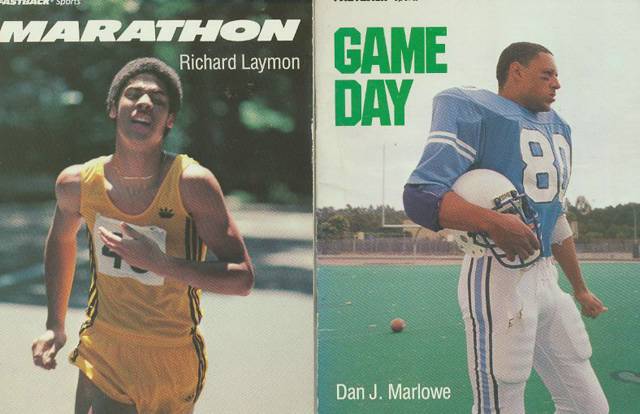
Ed Gorman has some more questions and comments about Dan J. Marlowe. I've sent him a note about Al Nausbaum's relationship with Marlowe, but I'd like to take off from Ed's remark about the support Marlowe received after his stroke from So. Cal. writers like Richard Laymon. I have three odd little items called "Fastback Sports Books" by Marlowe and one by Laymon. These were published in 1985, and they're 25-30 pages long. I have no idea where they were sold or who the intended audience was. I just couldn't resist picking them up when I saw them. I wonder how much Marlowe and Laymon got paid for these.
Something Old, Nothing New
Something Old, Nothing New: "Clark Redfield on Book Reviewing
I keep planning to write something about Elmer Rice's play Dream Girl, and then putting it off. Meanwhile, here are some more quotes from the play's wisecracking and frankly not very likable male lead, Clark Redfield, a book reviewer who -- to the surprise of the heroine, Georgina Allerton -- wants to get out of book reviewing and into the more rewarding field of sportswriting."
Highly recommended reading. Check it out.
I keep planning to write something about Elmer Rice's play Dream Girl, and then putting it off. Meanwhile, here are some more quotes from the play's wisecracking and frankly not very likable male lead, Clark Redfield, a book reviewer who -- to the surprise of the heroine, Georgina Allerton -- wants to get out of book reviewing and into the more rewarding field of sportswriting."
Highly recommended reading. Check it out.
Sunday, September 19, 2004
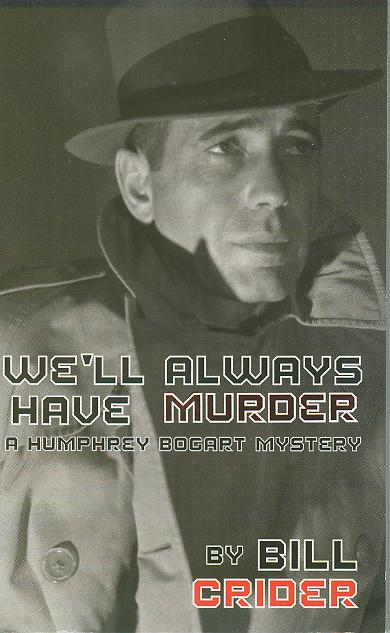
I went into a store yesterday and discovered that WE'LL ALWAYS HAVE MURDER is out in paperback. The publisher didn't tell me, but then publishers rarely seem to care about telling me anything. I think it's a pretty good book, and I had a great time writing it. And you have to admit that it has a great cover.

Subscribe to:
Posts (Atom)